Principal Nutrition Facts Svg Review
As a designer who spends half my life staring at stitch paths and the other half worrying about whether a customer will actually wear what they bought, I approach every new design asset with a healthy dose of skepticism. We have all seen the endless stream of "cute" graphics that look great on a screen but turn into a muddy, unrecognizable mess once they hit the hoop. This is where Principal Nutrition Facts Svg catches my eye. It sits in the Crafts and Graphics category, which immediately signals its intended use: cutting machines like Cricut or Silhouette, as well as digital printing.
However, the real question for us embroidery enthusiasts is not just how it looks as a flat vector, but how it translates into thread. Can this specific layout hold up under the tension of a machine? Does the visual hierarchy survive the conversion from pixel-perfect SVG to textured fabric? In this review, I am putting aside the marketing copy to look at Principal Nutrition Facts Svg through the lens of practical application, considering everything from small business merchandise to heartfelt personalized gifts.
The First Impression: Clarity Over Complexity
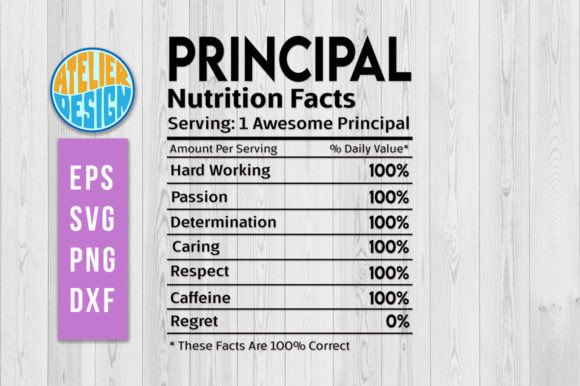
When I first loaded Principal Nutrition Facts Svg into my digitizing software, the immediate takeaway was its structural integrity. The design relies on a grid-like layout reminiscent of standard nutritional labels. For an embroidery file, this is a double-edged sword. Grids are stable, but they can also be rigid. What saves this design is the inherent simplicity of the shapes involved—rectangles, lines, and blocky text areas.
The mood it creates is informative yet playful. It taps into a trend of "ironic utility," taking something clinical and making it decorative. Visually, it feels clean. There is no excessive ornamentation or delicate filigree that might fray or tangle during stitching. Instead, it offers bold blocks of information. This makes it an excellent candidate for machine embroidery design projects where readability is key. If you are aiming for a design that says "I know what I’m eating" with a wink, this graphic delivers that personality without requiring a microscope to appreciate the details.
Real-World Application: From Screen to Stitch
Let’s talk about where this design truly shines. I recently envisioned using Principal Nutrition Facts Svg for a batch of custom aprons for a local bakery client. The concept was to print or embroider the "nutrition facts" of their signature sourdough loaf. Because the design is essentially a series of high-contrast blocks, it works beautifully on heavy cotton duck cloth or canvas tote bags. These fabrics provide the necessary stability to handle the stitch density without puckering.
Another scenario that popped into my head was creating a set of matching kitchen towels for a wedding gift. Imagine a bride and groom receiving embroidered tea towels featuring the nutrition facts of their favorite comfort foods. The handmade product value here is immense. Buyers on platforms like Etsy love personalization, and this design allows for easy customization of the text fields before exporting. Whether it’s a sweatshirt embroidery project for a fitness influencer or a simple tote bag design for a grocery haul enthusiast, the versatility is undeniable.
For the Etsy seller or small shop product creator, this design is a low-risk, high-reward asset. It appeals to a broad demographic—from health nuts to parents making funny baby clothes. The embroidery project potential extends to nursery decor as well; imagine a onesie with the "nutrition facts" of a newborn (weight, height, birth date) instead of calories and fat. It’s a clever twist that turns a generic graphic into a sentimental keepsake.
Where Caution Is Required
While the design is robust, it is not without its pitfalls. Embroidery is a physical process, and physics sometimes disagrees with digital perfection. One area to watch closely is the hoop size. If you attempt to stitch this design too small, the fine lines representing the nutritional data may bleed together. The text becomes illegible, and the design loses its charm. I strongly advise testing the design in your smallest viable hoop size before committing to a full production run.
Fabric choice is equally critical. Avoid stretchy knits unless you are using a heavy-duty stabilizer. The tension from the fill stitch areas can distort the knit, causing the rectangular shape to warp into an oval. Similarly, textured fabrics like bouclé or thick chenille can obscure the finer details of the design. For these materials, a simpler outline might work better than the full fill-heavy approach this SVG suggests.
Dark fabrics present another challenge. Since many nutrition labels are designed with black text on white backgrounds, you need to ensure you have enough contrast in your thread colors. Using dark grey thread on navy blue fabric will result in a design that is nearly invisible. Stick to high-contrast combinations, such as white thread on black fabric, or bright yellow on dark green, to maintain the crispness of the original graphic.
Technical Considerations for the Discerning Designer
Before you pop this file into your machine, there are a few technical steps every professional takes. First, always inspect the small details. Zoom in on the SVG. Are the lines distinct, or are they merged? If they are merged, you may need to add a satin stitch border or adjust the spacing in your digitizing software to prevent thread breaks.
Thread color selection is not just about aesthetics; it’s about function. A monochromatic scheme can look sophisticated, but a multi-color approach might highlight the different sections of the label effectively. Experiment with thread colors to see which combination best separates the headers from the data points. Also, consider the stabilizer. For a design of this nature, a cut-away stabilizer is often safer than tear-away, especially if the final product will undergo frequent washing. You want the embroidery to remain flat and true, even after months of use.
It is also worth mentioning that while this is marketed as an SVG for cutting machines, many crafters convert these files for embroidery. If you are doing so, remember that SVGs do not contain stitch data. You will need to digitize them yourself or use a reliable auto-digitizing tool, followed by manual cleanup. Check the licensing terms carefully. Just because you bought the file does not automatically grant you commercial rights to sell the finished physical goods. Always confirm whether you have permission for commercial embroidery usage.
Final Verdict
Principal Nutrition Facts Svg is more than just a novelty graphic; it is a versatile design asset that bridges the gap between humor and utility. Its clean lines and structured layout make it an ideal candidate for various embroidery project types, from custom apparel to personalized gifts. While it requires careful attention to fabric choice, stitch density, and thread contrast, the payoff is a professional-looking finished product that stands out in a crowded market.
For the creative entrepreneur looking to add a touch of wit to their inventory, this design offers a strong foundation. It encourages engagement, sparks conversation, and fits seamlessly into the world of handmade commerce. Just remember to test, test, and test again. A little preparation goes a long way in ensuring that your finished product reflects the quality and care you put into your craft.